The armchair-critic would simply say, don't use hot water on passage. To these critics, I would encourage them to stay in bed, as getting up to use the toilet, they may slip and break a hip...happened to the bloke lying next to me in recovery at the hospital.
Risk verse reward…how well can you prepare?
An incident occurred that left me more embarrassed than burned.
Two nights offshore between Australia and New Caledonia, we were crossing confused seas with a 2–3 metre swell rolling through every ten seconds.
The winds had eased from the previous 24 hours of 20 knots, gusting to 25. The yacht was in her element, two reefs in the mainsail, the genoa furled by a third, and still making an easy 7–9 knots.
The other two crew were tucked safely into their bunks while I stood the middle watch from midnight to 3 a.m. The autopilot handled the conditions comfortably, leaving me alone with the darkness, the glow of the instruments, and the steady rhythm of the sea.
With an hour left before my shift ended, I ducked into the saloon to make a final lemon and ginger tea before bed.
Our crew policy offshore was strict: all hot drinks stayed in the sink while underway. The cooktop, oven, and microwave were completely off-limits whenever whitecaps were visible.
The kettle had just boiled. I poured half a mug of tea, leaving the remaining water in the kettle beside it, both sitting securely in the sink.
Bracing myself against the galley bench, feet spread wide for balance, I reached aft to stow the kettle behind the sink.
At that exact moment, while lifting the cup from the sink in the trough of a wave, the starboard hull began climbing the swell.
Slowly at first.
Then higher.
And higher.
And this time, it didn’t stop.
The starboard hull suddenly dropped off the back of the wave, slamming the lower bridgedeck with a heavy thump.
The impact was enough to wake the crew member sleeping in the starboard hull.
The sideways momentum sent me into a slow, unstoppable slide from the port-side galley, across the saloon floor, toward the starboard companionway, and then down the steps into the hull below (similar to snow-boarding).
Somewhere during the chaos, instinct took over and I deliberately dropped into a seated position.
My freshly made lemon and ginger tea came with me.
So did a towel from the table, two “non-slip” throw mats, and a collection of charging cables. Together we all 'snow-boarded' across the floor in slow motion as the yacht climbed the next swell before dropping once more into the trough.
The whole sequence seemed to last forever.
I stayed seated in the starboard hull until the yacht finally steadied on the crest of the next wave.
As the motion eased, I could make out the shadow of my crew member sitting upright in bed.
“What the hell was that?” he had been thrown hard across his bunk as well.
I quietly apologised for waking him, gathered up the scattered mess, and climbed back into the saloon.
The internal chartplotter still showed us perfectly on course, autopilot engaged and happily tracking the route.
Outside, the yacht had already settled back into her rhythm, as though nothing had happened at all.
Tea was upside down on my arm
While ascending the starboard steps, I noticed my teabag on our beautiful clean couch.
Feeling my left arm, it was hot and wet. The half-filled tea cup had taken flight and chose to land upside down on my arm. I didn't think too much of it as I had a very thick jumper (jersey) protecting my arm.
It wasn't until later that the surgeon indicated this may have been the telling fact for the severity of the resultant burn.
Having recently completed one of the Offshore First Aid Courses, particularly the burns component, I remember Wendy (our course instructor) asking us
“What is the first thing you do with a burn?”
(I remember this as plain as day).
"Put it under cold running water”.
“For how long?”
“20 minutes".
So I did that, but only for 10 minutes. I didn’t want to keep our precious water running for 20 minutes. Added to this, the noisy water pump motor was next to the bed of the crew member coming up on the next shift.
I put the plug in the sink thinking that may save water, but the slow sloshing forced me to pull the plug out before it ended up on the floor, making a difficult situation even worse with a wet floor.
After the ten-minute water run, I used an ice pack until the end of my shift (40 minutes later). It actually moulded nicely between the jumper and my arm.
I awoke four hours later, my arm feeling a little stingy.
The ocean swell and winds had started to dissipate, in fact, it looked like a stunning sailing day ahead.
From International Medical Guide for Ships, I located the burns section. Diving into the Cat 1 Extended Offshore First Aid Kit, I located a gel dressing specific for burns. Opened it and placed it over the wound area.
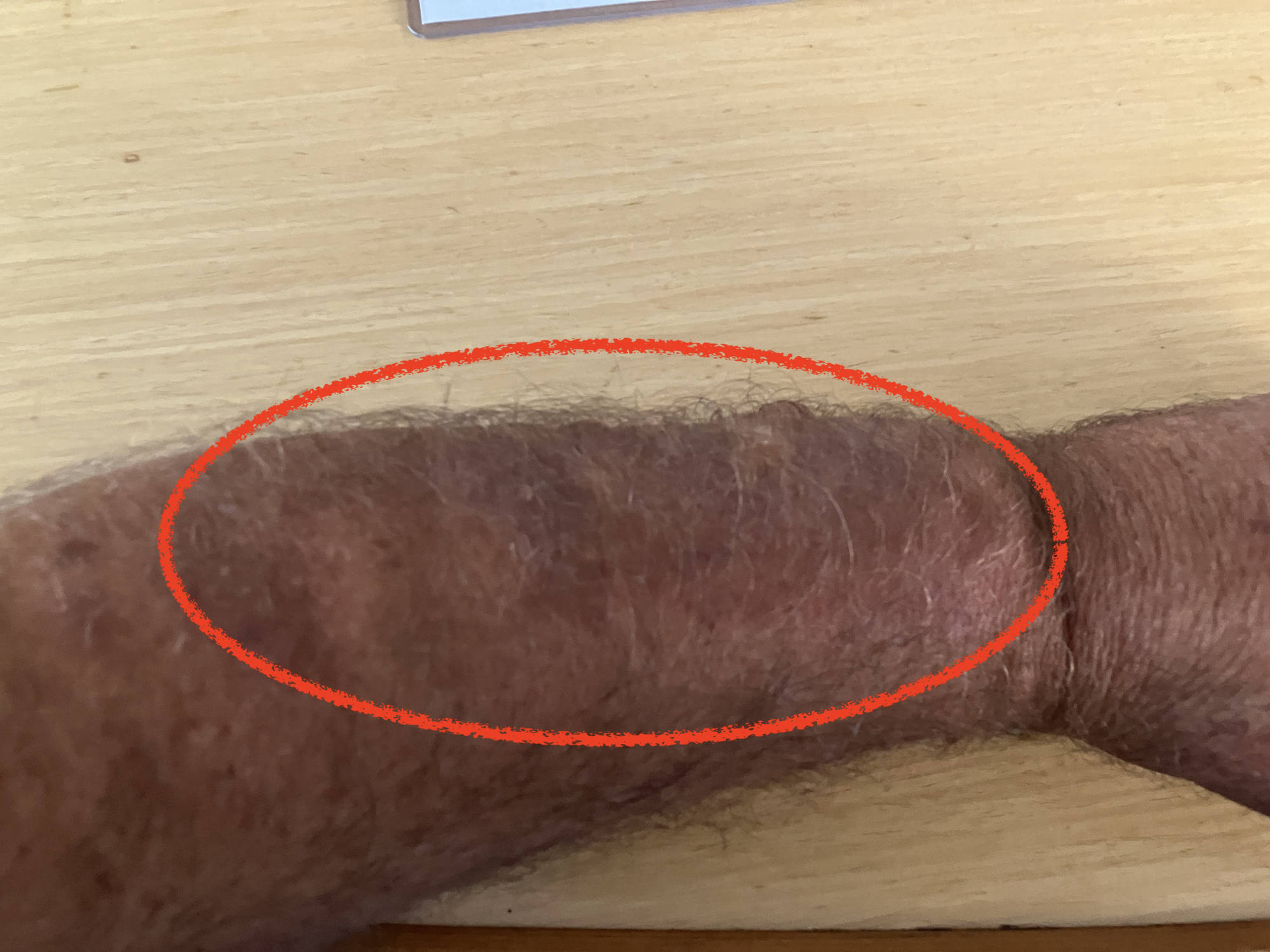
At this stage, there were no blisters or even discolouration. It was just uncomfortable.
This dressing worked a treat, and for the next 24 hours, I felt fine, just taking a few Panadol as a precaution.
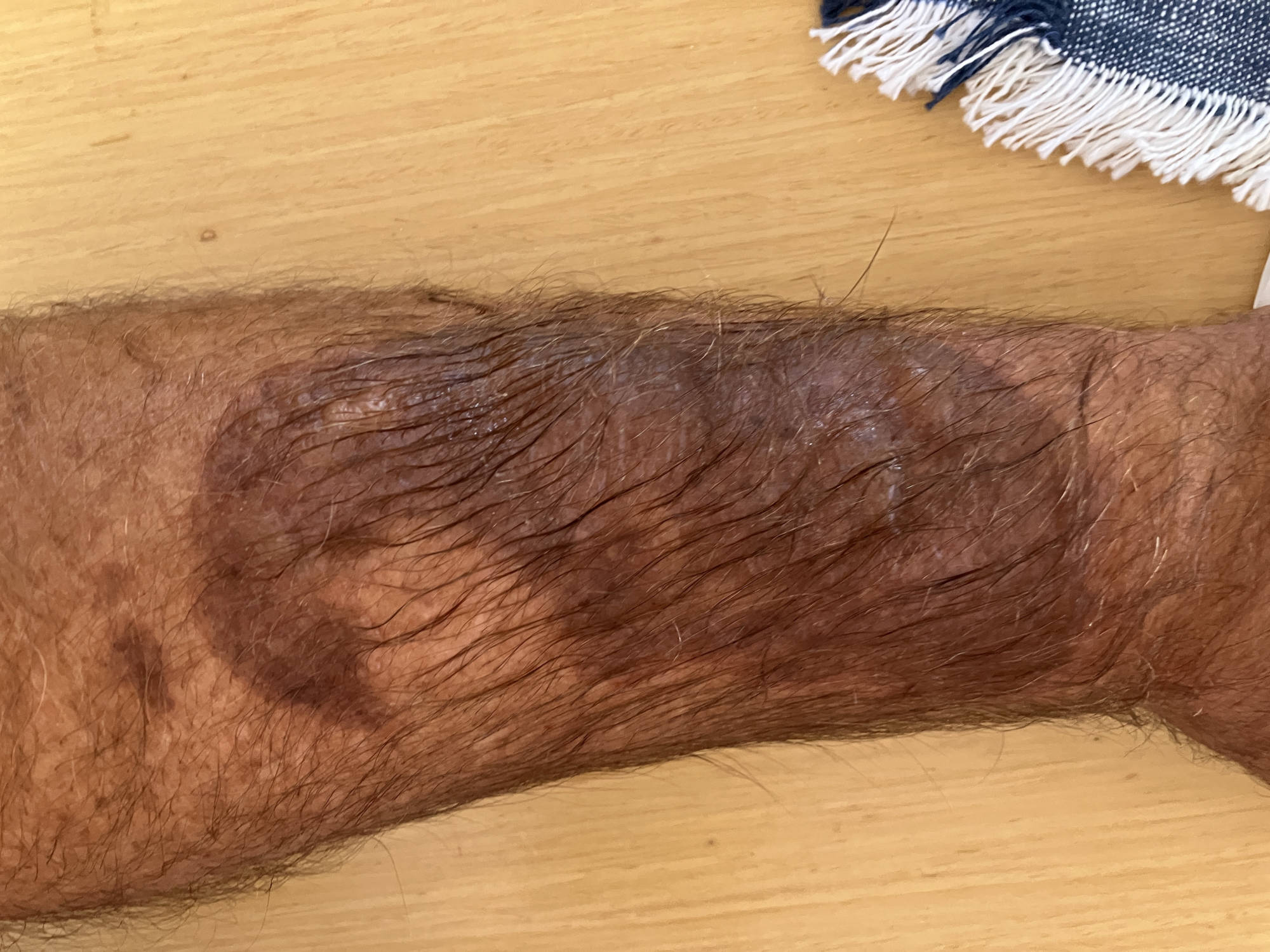
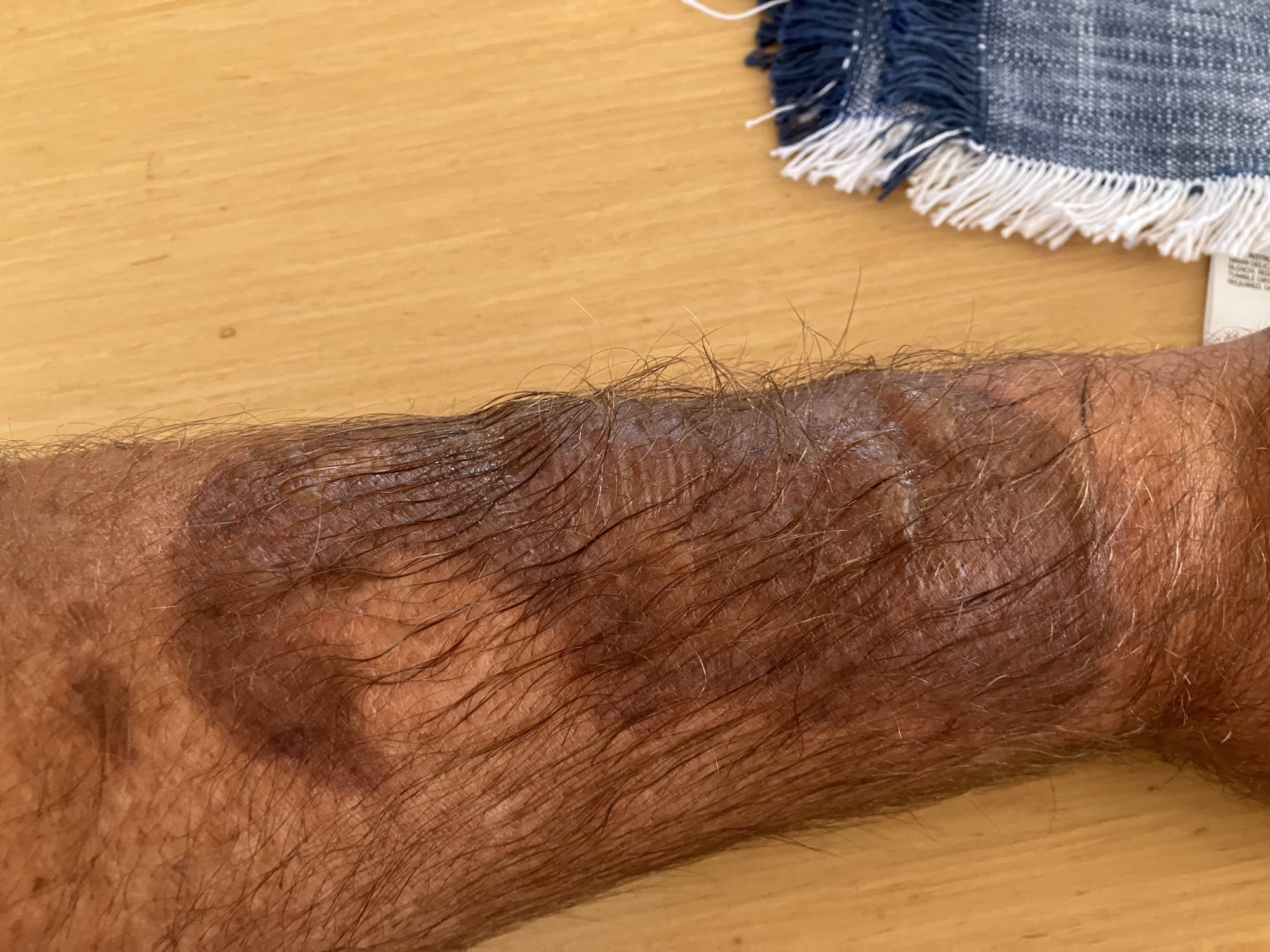
Two third-degree burns, an area of second-degree and the rest first-degree
We had a daily midday radio position report to do each day with Passage Guardian, and this day in the ‘comments’ I wrote that ‘crew member had sustained a scald from boiling water’ to which Peter replied that the Medical information was noted.
We were in a very fortunate position to have two medical practitioners (family members) who work in emergency and who were aware of our medical kit contents and available for opinions with this type of challenge.
Additionally, we had just installed Starlink, allowing us to video call these practitioners whilst on passage.
We continued dressing the affected area.
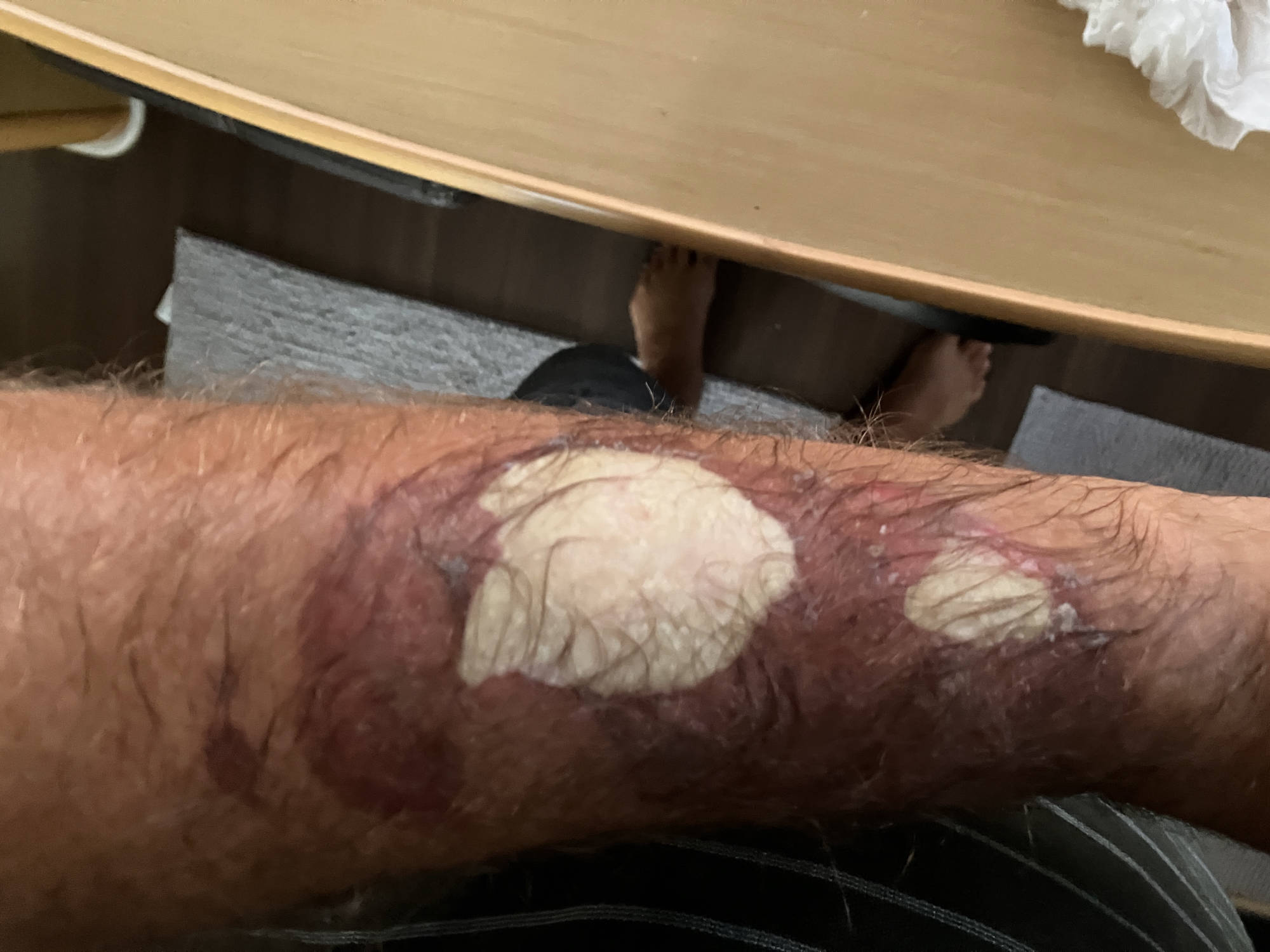
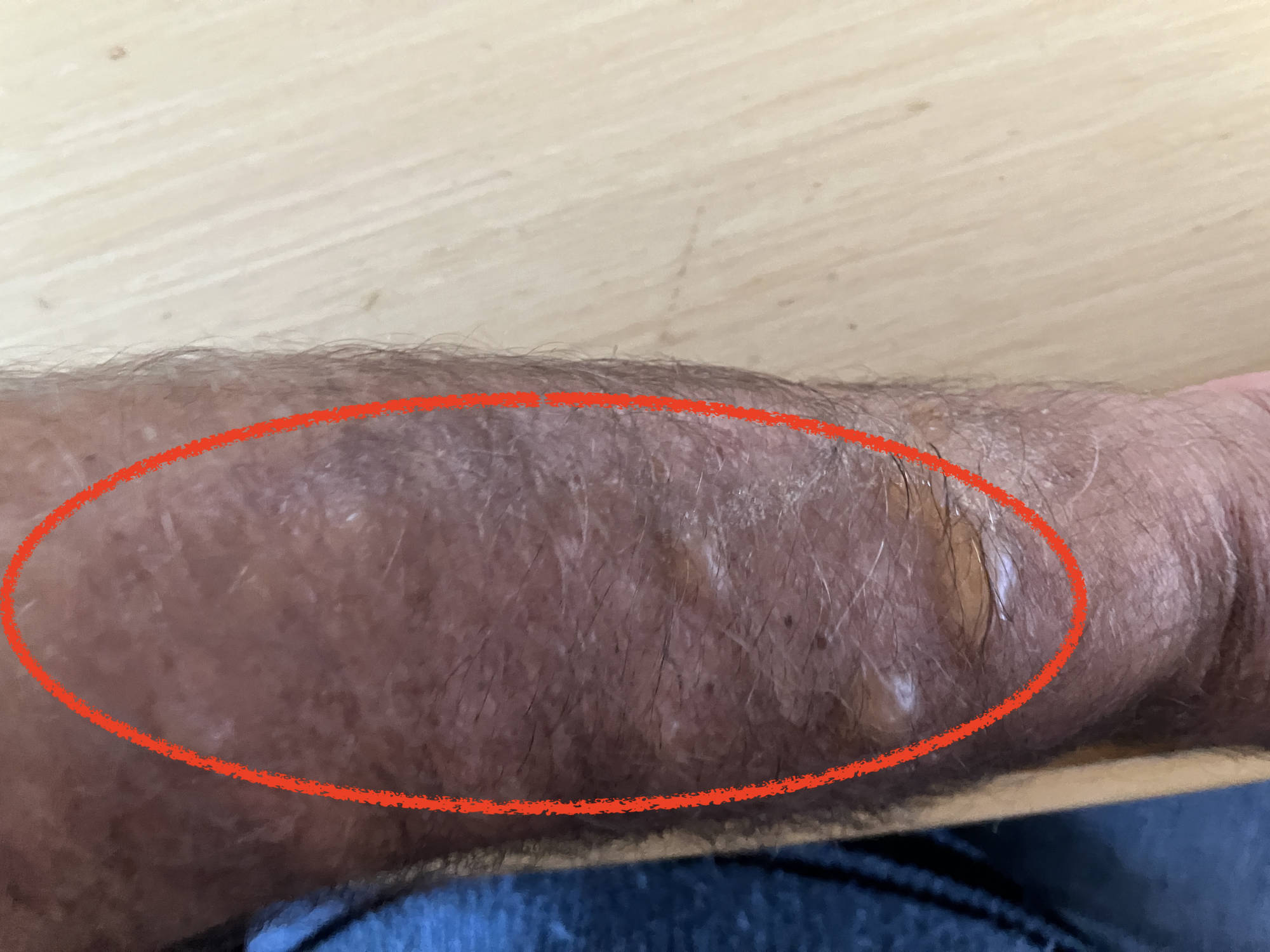
By the third day of the burn, we moved to a cream that had anaesthetic and anti-bacterial properties. This was amazing, to the point that I could feel very little discomfort. Over the ensuing three days, blisters had formed and in their own time, eventually popped.
By the time we were at Ilot Maitre (New Caledonia), we were using Flamazine™. This is used to prevent infection specific to burns and to help remove dead tissue. It soon sorted the men from the boys with the third-degree blister areas turned white.
Our practitioners then instructed us to seek medical help at an Emergency Hospital, as they were not comfortable with what they saw.
The staff at the New Caledonian Hospital (40 minutes north of Noumea) were exceptionally helpful, quick and very professional. They assessed that surgery may be required, giving me two options. Allow them to further investigate a suitable outcome and spend two weeks close to the hospital, or get the first flight to Australia and seek emergency help there. We chose the latter.
The outcome was that there were two third-degree burns, an area of second-degree and the rest first-degree. With the exception of the third-degree burn areas, the healing was going exceptionally well. I was complimented by both hospitals on wound care. At the time of writing, are yet to take any oral antibiotics.
The armchair critic would simply say, don't use hot water on passage. To these critics, I would encourage them to stay in bed, as getting up to use the toilet, they may slip and break a hip…this happened to the bloke lying next to me in recovery at the hospital.
It all stems back to risk verse reward.
Is the risk of something warm on a cold night (that you may have done many times before), worth the reward? If so, have a plan B for when it comes unstuck.
We could use a thermos for hot water (which we used to do). In our/this case, it could have ended up being a projectile. The exact reason they are frowned upon on aircraft.
In hindsight (with a clear non-fatigued mind):
1. I should have kept the water running for 20-minutes over the wound area. We had separated our freshwater tanks into two 300-litre units for passage-making, so we still had 300-litres to spare if it came to that.
2. I am grateful to have completed the OFFSHORE CRUISING Preparation Course. It's from their pre-departure planning and advice that we formulated a process for such an event and it ran like clockwork.
The takeaway from this successful burn management:
1. Carrying the International Medical Guide for Ships,
2. Burn gel dressings, burn cream (that contained an anaesthetic and antibiotic), and Flamazine™ are at the top of the list.
3. Have a way of getting medical help as soon as possible. Preferably with someone who knows your First Aid Kit contents, and
4. Having completed a recent specific Offshore First Aid Course.
Changes to our First Aid Kit:
1. The non-stick gauze dressings - increased from 4 to 20 (2 per day).
2. The gauze bandage rolls - increased from 4 to 15 (1 every two days).
3. The burn-gel dressings - increased from one to two.
4. The burn cream remains at one (it must contain an anaesthetic and antibiotic).
As always, you should always seek professional advice and use this experience to add to your first aid toolkit.
Author note: I have used HEART TRAINING four times and can strongly recommend their courses for those on sailboats (I mandate this type of course for those cruising offshore with us).
I see their website has First Aid Kits - specific to cruisers (2023), containing the bits specific to the burn injury discussed here, and more (Marine Cat 1 or 2 first aid kit).
I am not sponsored by any persons or company mentioned in this article - James