Adding to your SINGLE-HANDED TOOLBOX

AUTOPILOT

Raymarine Autopilot

On a single-handed yacht, the main backup is the primary autopilot. Not only is this assuming that you have an autopilot, but that the failure of the primary unit should have easy access and connection to an alternate autopilot.

On a large vessel, many are under the false illusion that the failure of an autopilot simply requires manual sailing until time permits to conduct a repair.

We have first-hand experience with autopilot failure on a 2-crew sail from Tonga to Fiji. During this 4-day trip, the autopilot failed on day two, which left us with 2 days of sailing manually. The autopilot was unable to hold course due to boat speed and wind, disconnecting when speed (>9kts) and wind (>25kts) were exceeded.

Normally, autopilot failures occur at the worst time (night in unstable weather, as was the case with us), making repair or reconnection of a second unit difficult, if you have that alternative.

While we did carry a spare autopilot drive unit, the drive unit was located behind the helm wheel and connected via a sprocket and chain to the main steering.

In swells of 3 metres with wind over 20kts, we could have turned into irons, released a drogue, and worked on the system. This became are last resort.

Instead, we chose to hand-steer and decrease shift periods to reduce fatigue levels to a safe anchorage.

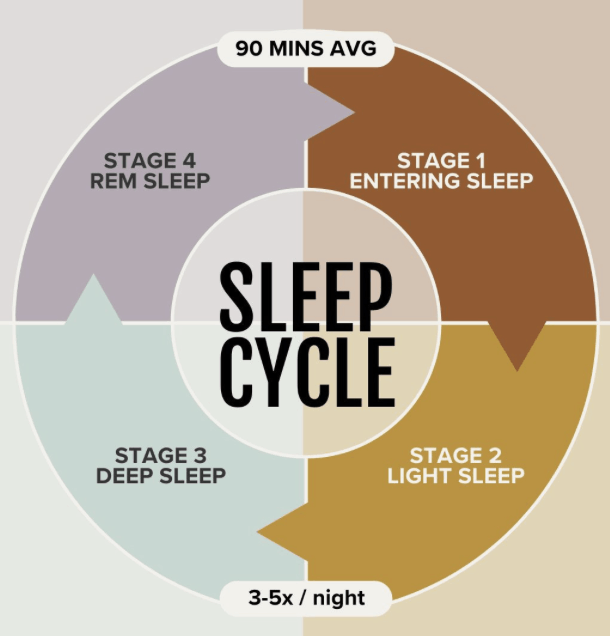
On a side note, I had very high confidence in the other crewmember. This is important as it allows you to get good 'stage 3' sleep during your off-shift period.

Hand steering and somehow starting to search through your spares to repair or reconnect a second unit is near impossible. This lifts your single-handed sailing safety risk up many steps. Stress levels climb, and the mind processes start to suffer exponentially.

Our lesson and resolution: We have an independent second alternate autopilot permanently installed. The only thing that changes is the electrical switching.

The autopilots have separate power sources that culminate in the main switchboard with a switching system that does not permit both autopilots to be on at the same time. It takes 10 seconds to do.


ANCHOR

Rocna Anchor

A secondary anchor is carried in the event your primary anchor is lost at sea (as occurred in our case), or is lost during attempted retrieval at depth (happened to friends of ours in 30 metres of water).

In both cases, second anchors were available. Otherwise, cruising would come to an abrupt end.

Our lesson and resolution: We have an emergency grab bag containing an angle grinder, diamond cutting blades, leather gloves, large pliers, tie wire, and chain links. This grab bag is also used for cutting stays in the event of a stay or mast failure.

Our secondary anchor is stowed securely toward the fore of the vessel. It has its own swivel and a length of chain connected, and can be easily worked on our foredeck area. This also requires limited muscle to deploy.

On a side note, we carry a spare windlass solenoid, too. I have seen people requesting a solenoid three times now. With their anchors and chains out, now having to be physically retrieved.

MIND GAMES

Sleep Cycle

Health and fatigue are the personal challenges facing a single-handed sailor. Understanding fatigue and knowing your limits in sleep (in particular Stage 3), food, and hydration are key.

While many will show disregard for this topic, it's not until a challenge occurs and upon self-reflection, you realise that the finger only points straight back at yourself.

Additionally, your Insurance may not permit single-handed sailing unless this can be substantiated with proof of training and experience.

Our lesson and resolution: In our case, single-handed trips are limited to 48 hours. Multiple fatigue courses have been completed, and we are acutely aware of a person's body clock and what effect this has on fatigue.

Other thoughts:
With the above challenges in hand, the tackling of single-handed sailing can start. All lines should lead to the helm.

It goes without saying that outside the helm (if you have a secure helm area), or at night, you should always have a life jacket on.

We personally do not venture onto the deck whilst underway unless it is an emergency. In this case, a double-ended tether is used to connect to the vessel's external safety line.