Passage Planning: Planning beyond your next Passage
Part: 3 of 4 (6 months before departure)
Extended cruising changes the way you plan. A single offshore passage may last several days, but a South Pacific cruising season can involve repeated passages, remote anchorages, changing weather, limited supplies and long periods away from reliable marine services.
The plan therefore needs to extend beyond the next destination. Food, water, fuel, maintenance, spare parts, crew fatigue, communications and weather windows all become part of the passage-planning process.
Our approach was to plan the cruising season in stages while keeping enough flexibility to change the route when weather or circumstances required it.
Plan Beyond the Next Passage
Once the initial passage is complete, where to next? Even the passage after the next passage.
Cruiser conversations often reveal useful details about whale and shark activity, ocean currents, reefs, anchorages and local conditions.
Following the fleet is not part of our cruising strategy. We make arrangements to catch up with other boats through WhatsApp a month or so later.
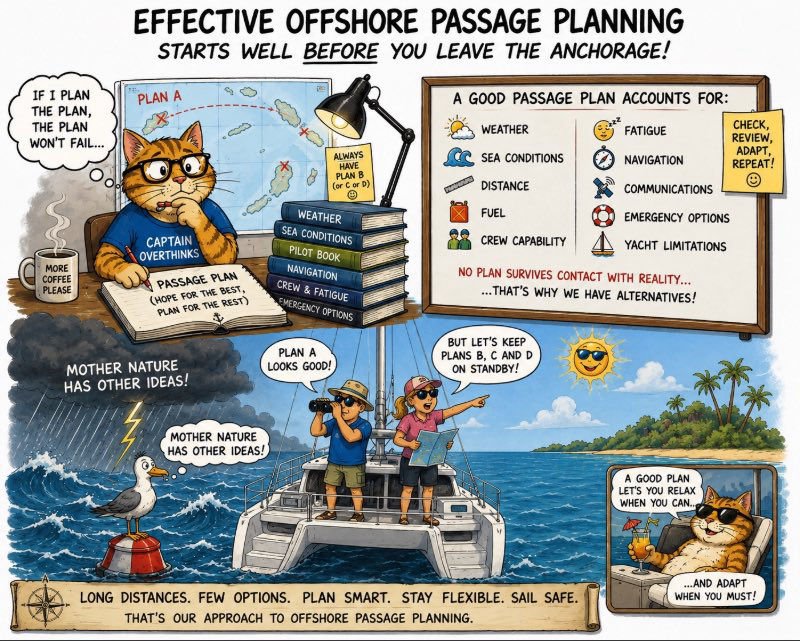
Manage Weather Across the whole Cruising Season
We keep a close eye on South Pacific weather, changing trade winds, political developments, elections and medical alerts as the cruising season progresses.
Conditions, local requirements and weather patterns can change quickly, so today's plan may not be the plan you follow next month.
Visa Limits Can Dictate Your Cruising Plans
Visa restrictions are another major factor in South Pacific passage planning. Many countries provide around three months, but the exact allowance varies by nationality and destination. You must leave before your permitted stay expires.
For that reason, we start watching potential departure weather windows well before the visa deadline. By around the two-month mark, the weather forecast, prevailing winds, sea conditions and our remaining time in the country all become part of the decision.

Allow Time for Maintenance
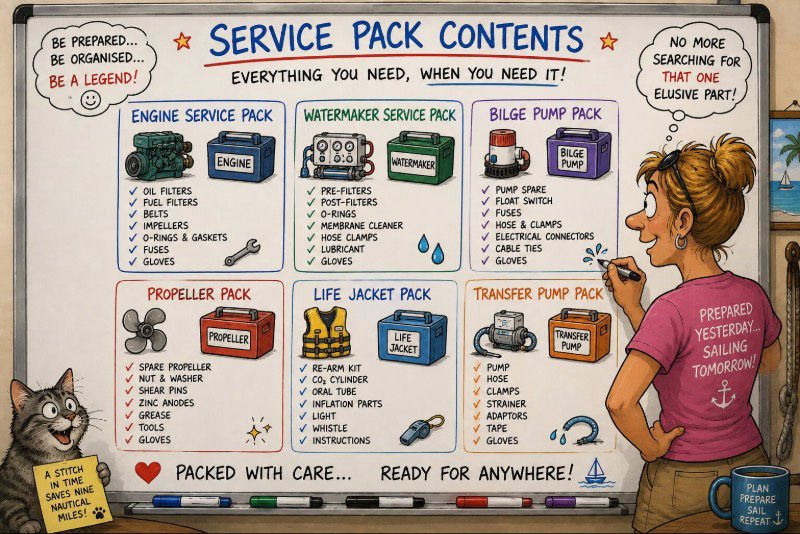
It is here that the Maintenance Service Packs we discussed in Part 1 come to the fore.
Previously Prepared Packs
Without rummaging through lockers, the consumables are at hand along with tools, spares and even a checklist. We then use the tough zip-lock bags as disposal bags.
Be proactive
Set time aside to check oils and general wear-and-tear. It's not the time to be dismantling items because 'you thought....'. Once done, log it in the Maintenance Log.
It's during these times that we also log the hull cleans and pest control, and even take video footage to prove to authorities our recorded proactive approach to Biosecurity, a major issue at incoming ports like New Zealand and Australia. You will be asked.
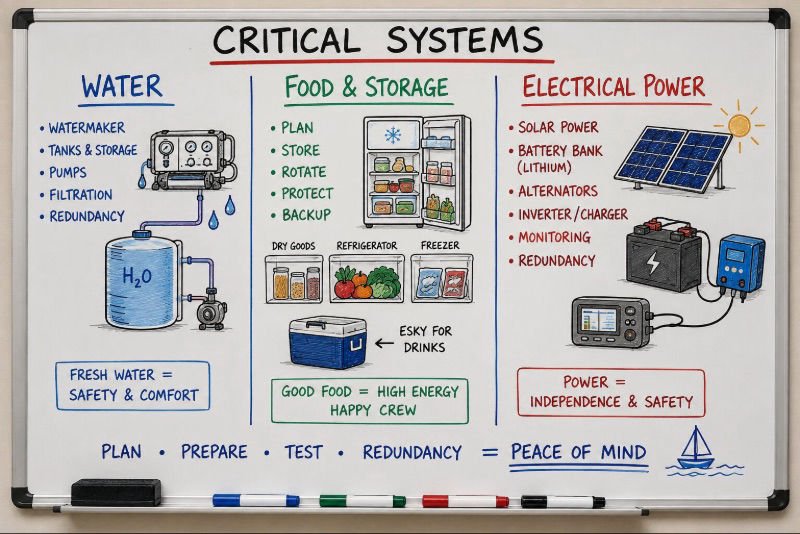
Critical System Management
Use this guide to assess weather, maintenance, water, energy, spares and documentation before departure.
Each system has been tested, is reliable, well-designed, and supported by a practical backup.
Good preparation reduces preventable failures and helps maintain essential operations throughout an offshore passage.
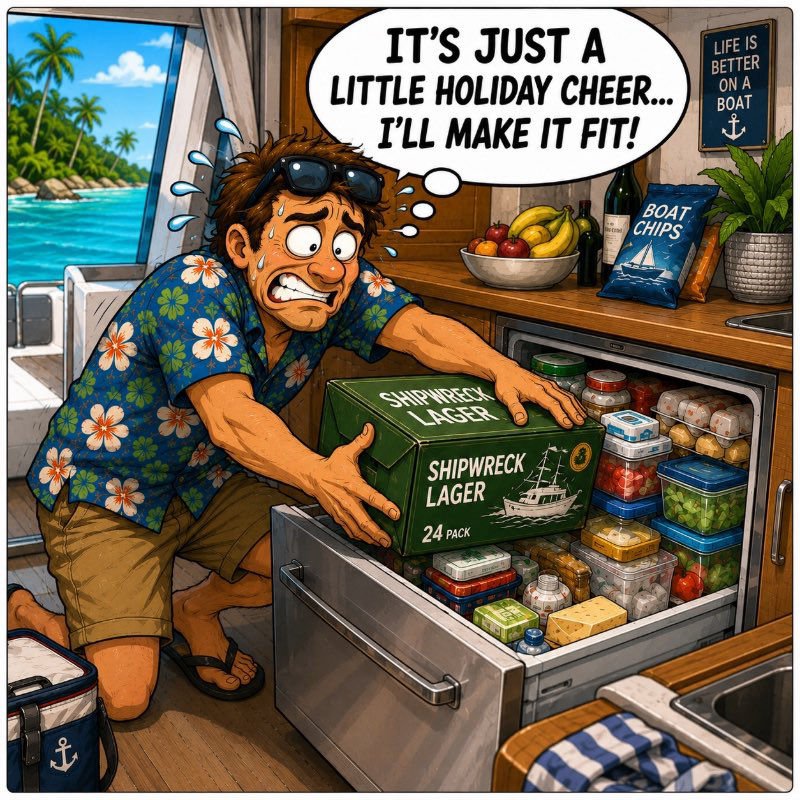
Spares: What are the right spares to carry?
Choosing the right offshore spares starts with understanding which systems are critical and which failures you can realistically repair.
Carry proven replacement parts for engines, electricity, water, communications and navigation.
Spares should be tested where possible, correctly labelled, stored, documented and supported by practical repair tools and backup systems.
Documents: Volumes of Paperwork
Offshore cruising generates considerable paperwork, from vessel records and maintenance schedules to manuals, warranties, insurance, crew documents and emergency procedures.
Keep critical information organised, current and accessible without internet access.
Good documentation supports repairs, troubleshooting and compliance, while digital copies protect essential information when original documents are unavailable.
As an example, we have 5 concertina folders with all Ships data onboard, a Captain's Folder (kept in a safe) and a Crew Manual.